Arizona Income Tax Calculator 2025: Your Complete Guide
Overview: The Era of the Flat Tax
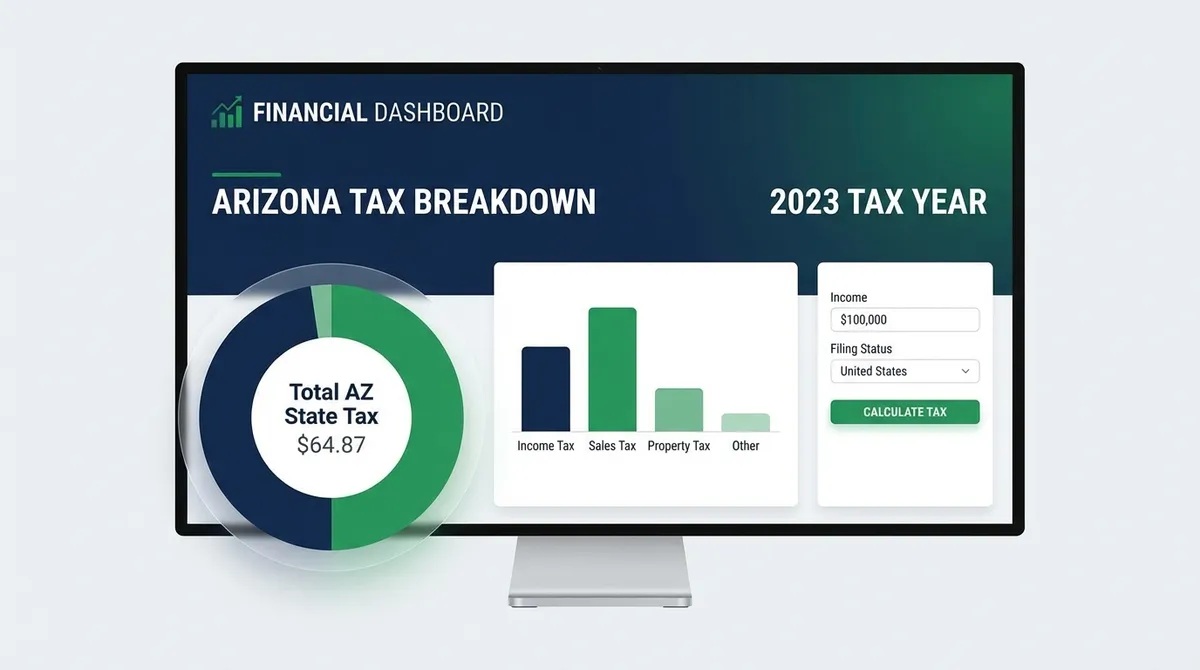
Arizona has undergone a massive transformation in its tax code. For the 2025 tax year, the state firmly utilizes a flat 2.5% individual income tax rate. This streamlined system, fully implemented after the phase-out of the old progressive brackets, positions Arizona as having one of the lowest flat tax rates in the entire nation—surpassed historically only by states with zero income tax. Whether you are a high earner or starting your career, calculations are now significantly more predictable.
How the 2.5% Flat Tax Works in Practice
Before this change, Arizona used a progressive system where higher income was taxed at higher percentages (ranging from 2.59% up to 4.5% or more). Today, the math is refreshingly simple, but there are still nuances regarding deductions that can lower your effective rate even further.
Your Arizona taxable income is essentially your Federal Adjusted Gross Income (AGI) minus your Standard Deduction (or itemized deductions), multiplied by the flat rate.
Standard Deductions for 2025
Similar to the federal system, Arizona offers a standard deduction that reduces the income subject to tax. For the 2025 tax year, these amounts have been adjusted for inflation:
*Note: Exact deduction limits are confirmed annually by the Arizona Department of Revenue (ADOR) based on the Consumer Price Index (CPI). Inflation indexing ensures your deduction keeps purchasing power parity.
Advanced Strategy: Arizona Tax Credits
While deductions lower your taxable income, tax credits reduce your tax bill dollar-for-dollar. Arizona is unique in offering extensive credits that allow taxpayers to direct their tax liability to charitable causes rather than the state general fund.
If you owe $1,000 in taxes but donate $400 to a qualifying charity, you only pay the state $600. It effectively costs you nothing to donate, as you would have paid that money to the state anyway.
1. Qualifying Charitable Organizations (QCO)
Donations to organizations that serve low-income residents, chronically ill children, or foster children use this credit code.
2. Public School Tax Credit
This credit supports extracurricular activities (sports, band, field trips) at Arizona public or charter schools. You do not need to have a child in the school to maximize this credit.
3. Private School Tuition (STO)
Donations to School Tuition Organizations fund scholarships for private schools. This limit is significantly higher and increases annually.
Economic Context: Cost of Living in Arizona
Understanding your tax burden is only half the equation; the other half is purchasing power. Arizona's cost of living has risen significantly since 2020, particularly in Phoenix and Tucson.
Home prices have surged. The median home in Phoenix is significantly higher than the national average.
Electricity (AC) is a major expense in summer, but mild winters mean low heating bills.
Arizona is a car-dependent state. Gas prices and insurance rates are typically above national medians.
Arizona Tax Guide for Retirees
Arizona has long been a haven for snowbirds and retirees, and the tax code reflects that. Beyond the Social Security exemption, there are other perks to retiring in the Grand Canyon State.
Pension Exemptions
Arizona offers a deduction of up to $2,500 for income received from federal, state, and local government pensions (including military). While not a full exemption, every bit helps reduce your taxable base.
Property Tax Freeze
For seniors over 65 who meet certain income and residency requirements, Arizona offers a "Senior Property Valuation Protection" option. This effectively freezes the taxable value of your primary residence, protecting you from soaring property tax bills as home values rise.
New Resident Checklist: Moving to Arizona?
If you just moved here in 2024 or 2025, welcome! Here are the tax-related housekeeping items you need to tackle immediately.
- 1
Update Withholding (Form A-4)
Your employer needs to switch you to Arizona withholding rates. Since the rate is a flat 2.5%, you simply select that option. Don't leave your old state's withholding active!
- 2
Register Your Vehicle (VLT)
Arizona charges a "Vehicle License Tax" (VLT) based on the value of your car during registration. This can be a shock if you come from a state with flat registration fees. However, the VLT is tax-deductible on your federal return if you itemize!
- 3
Establish Domicile
To benefit from Arizona's tax laws, you must prove intent to stay. Get your AZ Driver's License, register to vote, and update your banking address ASAP.
Filing Your Return: What to Know
The deadline for filing your Arizona state return aligns with the federal deadline: April 15. If you cannot file by then, you can request an extension, but remember: an extension to file is NOT an extension to pay. You must estimate and pay any tax owed by April 15 to avoid penalties.
Did You Know?
Arizona's move to a 2.5% flat tax makes it the state with the lowest flat tax rate in the country. This was a deliberate move to compete with zero-income-tax states like Texas and Florida for business owners and high-income earners. (Source: Arizona Department of Revenue)
Most Arizona residents will file Form 140 (Resident Personal Income Tax Return). If you are a part-year resident or non-resident with Arizona-sourced income (such as rental income from a Scottsdale property), you will likely need Form 140PY or Form 140NR.
Filing Deadlines
- Standard: April 15, 2025
- Extension: October 15, 2025 (Requires Form 204)
Payment Options
- AZTaxes.gov: Direct debit (free) or credit card (fees apply).
- Paper Check: Must include payment voucher (Form 140V).
Frequently Asked Questions (FAQ)
Does Arizona tax Social Security benefits?
No. Arizona is one of the states that completely exempts Social Security benefits from state income tax. This makes it a popular destination for retirees. When calculating your AZ AGI, you will subtract any federally taxed Social Security income.
Are military pensions taxed in Arizona?
No. Military retirement pay is 100% exempt from Arizona taxation. This benefit applies to pension income received from service in the Army, Navy, Marine Corps, Air Force, Coast Guard, and U.S. Public Health Service Commissioned Corps.
What is the sales tax rate in Arizona?
While income tax is low, sales tax can be higher. The state base rate is 5.6%, but municipalities add their own TPT (Transaction Privilege Tax). In cities like Phoenix or Tucson, the combined sales tax rate often exceeds 8.6%. It is important to budget for this consumption tax in your overall financial plan.
Do I have to file if I work remotely for an AZ company?
Generally, if you live in another state but earn wages from an Arizona employer who withholds Arizona tax, you may need to file a non-resident return to get a refund if the tax was withheld in error, or if you performed the work physically within Arizona. However, if you never stepped foot in Arizona, you typically only pay tax to your state of residence. Arizona law on "remote" work nexus can be complex, so consulting a tax pro is advised.
Disclaimer
This guide is for educational purposes only and reflects tax laws as of late 2024/early 2025. Tax codes change frequently. Always consult with a qualified CPA or tax advisor for your specific financial situation.