Complete Guide: Understanding Construction Loans in 2025
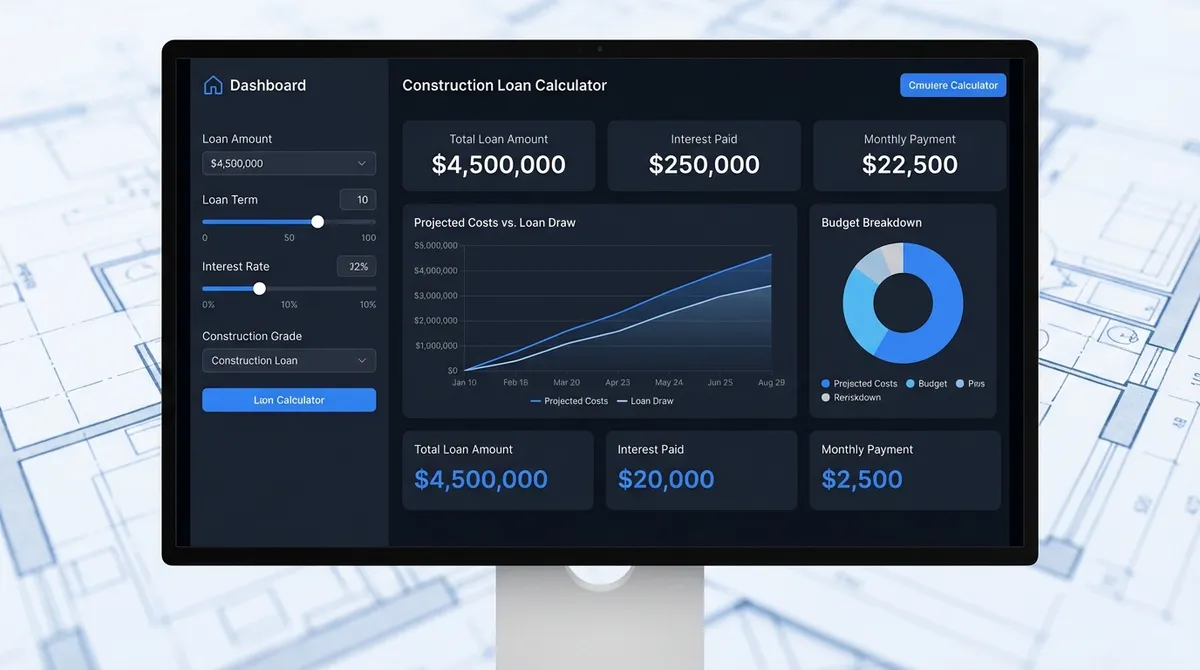
Building a custom home differs significantly from buying an existing one. Instead of a lump-sum payment, you need a financing vehicle that grows with your project. A **Construction Loan** is designed exactly for this purpose—disbursing funds in stages (called "draws") and requiring you to pay interest only on the money actually used. This guide breaks down the costs, the draw schedule, and how to avoid budget-busting surprises.
Unlike a traditional mortgage, a construction loan is a short-term loan used to pay for the cost of building a home. Once the home is built, you must convert the loan to a permanent mortgage or pay it off in full. This two-step process can be complex, but understanding the mechanics early can save you thousands in interest and fees.
How Do Construction Loans Work?
Construction loans function like a line of credit. You claim money as you need it, rather than all at once. Here is the typical lifecycle:
- 1Application & Approval: You submit your builder's contract, detailed plans, and budget to the lender. The appraiser evaluates the project based on its "future value" (what it will be worth when finished). You typically need a 20-25% down payment.
- 2The Draw Period (6-18 Months): As construction milestones are hit (e.g., foundation poured, framing done), the bank sends an inspector to verify the work. Once verified, the bank releases funds to the builder. You pay interest only on the released funds, not the total loan limit.
- 3Conversion or Payoff: Once the home is certified complete (Certificate of Occupancy), the loan essentially expires. You either pay it off (if you have the cash) or, more commonly, it converts into a permanent mortgage.
The Cost of Speed
Interest charges ramp up over time. In month 1, your balance is low (maybe just site prep costs). By month 10, your balance is nearly full, so monthly interest payments are highest right before completion. Delays at the end of a project are the most expensive because you represent the maximum loan balance.
Construction-to-Permanent (C2P)
Most borrowers today prefer a **Single-Close** loan. It saves you from paying two sets of closing costs (one for the build loan, one for the mortgage). The rate often automatically converts or locks in before you even break ground, protecting you from rising rates during the build.
Typical Draw Schedule Breakdown
Lenders don't just hand over cash. They follow a strict schedule to ensure the collateral (your house) is actually being built. A 5-draw schedule is common:
| Stage | Payout % | Milestone Completed |
|---|---|---|
| 1. Foundation | 15-20% | Site clearing, excavation, footings, slab or basement poured. |
| 2. Framing | 20-25% | Walls up, roof trusses, sheathing, windows, and doors installed. "Dried in". |
| 3. Rough-ins | 20-25% | Plumbing piping, electrical wiring, HVAC ductwork installed inside open walls. |
| 4. Interior Finishes | 20-25% | Insulation, drywall, flooring, cabinets, trim, painting. |
| 5. Completion | 10-15% | Driveway, landscaping, final mechanical hookups, Certificate of Occupancy issued. |
*Note: This is a simplified example. Complex details like percentage of completion are negotiated between your builder and lender.
The Draw Request Process: Step-by-Step
Many borrowers are surprised by the bureaucracy of getting paid. Here is exactly what happens when your builder needs money:
- Request Submission: Your builder submits a "draw request" form detailing completed work (e.g., "Foundation 100% complete").
- Lien Waivers: The builder MUST provide lien waivers from subcontractors. This proves the subs have been paid and won't put a lien on your house. Never authorize a draw without this.
- Inspection: The bank sends a third-party inspector to the site. They don't check quality (that's your inspector's job); they check progress. If the roof is only 50% done, they only approve 50% of the roof budget.
- Title Date Down: The title company checks public records to ensure no new liens have been filed since the last draw.
- Disbursement: Once approved, the bank wires funds or cuts a check to the builder (or sometimes jointly to you and the builder).
Requirements to Qualify
Construction loans are riskier for banks because there is no house to foreclose on if you default—only a half-built dirt lot. Therefore, qualification is stricter:
- Credit Score: Typically 680-720 minimum. 620 might get you a mortgage, but rarely a construction loan. See Credit Score impact.
- Down Payment: 20% to 25% is standard. Some programs (like VA or FHA One-Time Close) offer lower down payments but have stricter hoops to jump through.
- Debt-to-Income (DTI) Ratio: Usually maxed at 45%. You must be able to afford your current housing payment AND the interest on the new loan during construction. check your DTI ratio.
- Builder Approval: The bank won't let just anyone build the house. Your builder must be licensed, insured, and vetted by the lender.
- Detailed Plans: You need a fixed-price contract and a "Blue Book" of specs before the loan closes.
Strategies to Minimize Interest Costs
- Front-load your cash: If you have extra cash beyond the down payment, use it to pay for early stages (like foundation) before tapping into the loan. This delays the "clock" on interest accrual.
- Stick to the plan: Change orders (deciding to move a wall or change cabinets mid-build) cause delays. Delays mean you hold a high loan balance longer, costing you thousands in extra interest.
- Monitor the draw requests: Ensure your builder only requests funds for work actually completed. Advance payments are risky and increase your interest costs prematurely.
Is a Construction Loan Right for You?
Pros
- Customization: Build exactly what you want, where you want.
- Interest Savings: Pay interest only on funds used during the build.
- Equity: Many owner-builders have instant equity if the project is managed well (Appraised Value > Cost to Build).
Cons
- Complexity: Managing draws, budgets, and contractors is a part-time job.
- Risk: Cost overruns are your responsibility. If timber prices spike, you cover the difference.
- Higher Rates: Interest rates are typically higher than standard mortgages during the construction phase. Use our Interest Calculator to estimate costs.
The Economics of Building vs. Buying in 2025
One of the most frequent questions borrowers ask is: "Is it cheaper to build or buy?" The answer has shifted recently.
| Category | Buying Existing | Building Custom |
|---|---|---|
| Cost Per Sq. Ft. | $150 - $250 (Average) | $200 - $400+ (Premium) |
| Competition | High (Bidding wars) | Low (Finding land is the hurdle) |
| Maintenance | Immediate repairs often needed | Zero for 5-10 years (Warranties) |
| Energy Efficiency | Variable / Low | High (Spray foam, modern HVAC) |
While the upfront sticker price of building is often 15-20% higher, the Total Cost of Ownership (TCO) can be lower. A new custom home with modern insulation and efficient systems can save $200-$400/month in utility bills compared to a 1980s build. Additionally, you avoid the "renovation trap" of buying an older home that needs a new roof ($15k) or HVAC ($10k) in the first year.
Frequently Asked Questions (FAQ)
Can I build the house myself (Owner-Builder)?
Most banks will not allow this unless you are a licensed general contractor with a proven track record. The risk of cost overruns and unfinished projects is too high for lenders with amateur builders.
What happens if the project goes over budget?
You cover the overage out of pocket. The bank approves the loan based on the appraiser's value of the plans. They won't increase the loan amount just because lumber prices went up. You should always keep a 10-15% contingency fund in cash.
Do I pay principal payments during construction?
No. Typically, you pay **interest-only** payments on the amount drawn to date. Principal repayment starts only after the loan converts to a permanent mortgage.
Is the interest rate fixed or variable?
During the construction phase, the rate is often variable (tied to Prime). However, with a construction-to-permanent loan, you can often "lock" the permanent rate at closing, protecting you from future rate hikes.