Complete Guide: Cost Calculator
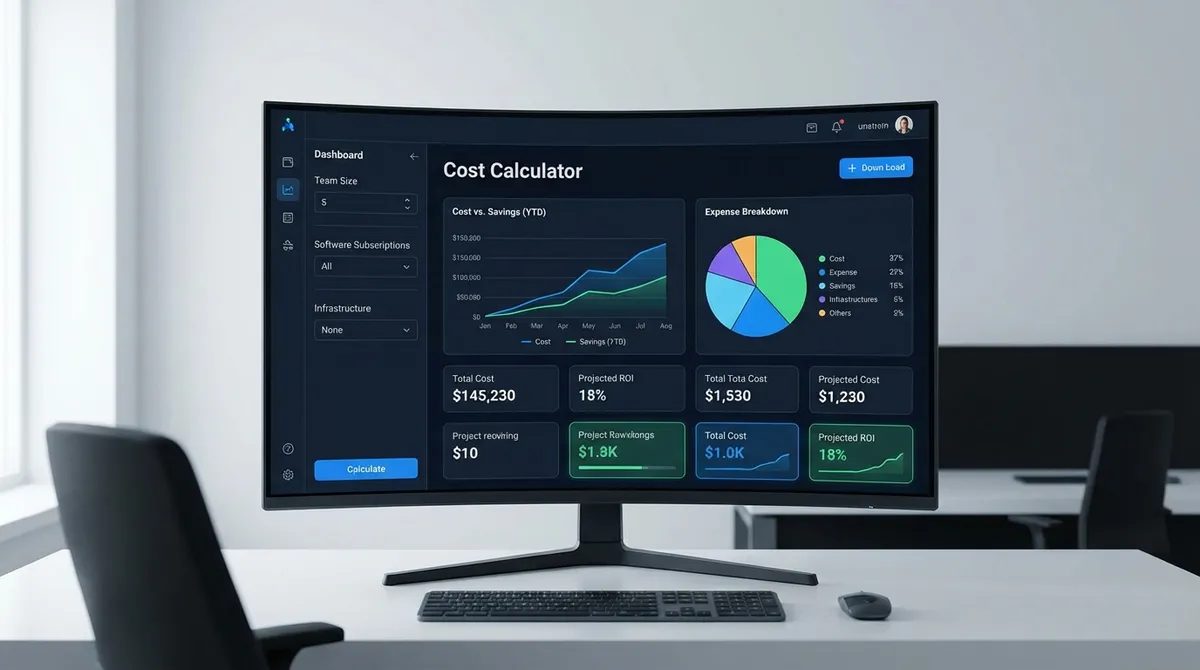
Use this guide to understand what drives your total cost, how to separate fixed vs variable expenses, and how to find the break-even point. Whether you run an e‑commerce shop, a local restaurant, or a SaaS product, knowing your cost structure helps you set prices, forecast profit, and decide where to cut or invest. Accurate cost calculation is the backbone of financial health, enabling businesses to pivot quickly when market conditions change.
Why Cost Analysis Matters?
Many businesses fail not because of poor sales, but because they don't understand their true costs. A clear view of your cost structure prevents underpricing and helps uncover hidden inefficiencies that drain profitability. Learn more about cost accounting at Investopedia.
How to Use the Calculator
- Choose your analysis period: Select monthly, quarterly, or annually. This aligns your costs with your revenue cycle for accurate margin analysis.
- Enter fixed costs: Input expenses that don't fluctuate with sales volume, such as rent, salaried staff, insurance, utilities, and software subscriptions.
- Add variable costs per unit: Include direct costs like raw materials, direct labor, packaging, shipping, and other specific per‑unit expenses.
- Include percent‑of‑price costs: Account for costs that are a percentage of the selling price, such as credit card processing fees (typically 2.9% + $0.30) and sales commissions.
- Set average selling price and volume: Enter your expected selling price and the number of units you plan to sell.
- Review results: Analyze your total cost, cost per unit, profit margins, and the critical break‑even point to make data-driven decisions.
Deep Dive: Fixed vs Variable Costs
Understanding the behavior of your costs is crucial for scalability. Costs generally fall into two categories, and knowing the difference helps you predict how profit will change as you grow.
Fixed Costs (Overhead)
Fixed costs are expenses that remain constant regardless of your business activity level, within a relevant range. They are the "price of admission" for being in business.
- Rent & Utilities: Your lease payment doesn't change if you have a slow month.
- Salaries: Payroll for administrative and management staff is usually fixed.
- Insurance & Legal Fees: Premiums and retainers are typically set annually.
- Software Subscriptions: Tools like Slack, QuickBooks, or CRM usually charge a flat monthly fee per user.
Variable Costs (COGS/Direct Costs)
Variable costs fluctuate directly with production volume. If you produce zero units, your variable costs should theoretically be zero.
- Raw Materials: The physical components of your product.
- Direct Labor: Wages for workers who assemble or create the product.
- Shipping & Packaging: Costs incurred only when a product is shipped.
- Transaction Fees: Payment gateway charges (Stripe, PayPal) occur only when a sale is made.
Core Formulas Needed for Analysis
While the calculator does the heavy lifting, understanding the math helps you intuitively grasp your business mechanics.
- Total variable cost = Variable cost per unit × Total Units Sold
- Total cost = Fixed cost + Total variable cost
- Average cost per unit = Total cost ÷ Total Units Sold
- Contribution Margin (Per Unit) = Selling Price − Variable Cost Per Unit (Gross Margin Calc)
- Contribution Margin Ratio = (Contribution Margin ÷ Selling Price) × 100% (CM Calc)
- Break‑even units = Fixed cost ÷ Contribution Margin Per Unit
- Break‑even revenue = Break‑even units × Selling Price (Revenue Calc)
Worked Example: E‑commerce Store
Let's say you run a Shopify store selling premium leather wallets.
Scenario: You sell a wallet for $50.
Your Variable Costs:
- Leather and thread: $15.00
- Labor (sewing): $5.00
- Custom box: $1.50
- Shipping: $3.50
- Transaction fee (2.9% + 0.30): $1.75
Total Variable Cost = $26.75
Your Fixed Costs (Monthly):
- Workshop rent: $2,000
- Marketing retainer: $1,500
- Software/Web hosting: $200
Total Fixed Cost = $3,700
The Math:
If you sell 500 wallets this month:
- Contribution per unit: $50.00 - $26.75 = $23.25 (This is what you make on each wallet to cover fixed costs).
- Break-even Point: $3,700 ÷ $23.25 ≈ 159.2 units. You need to sell 160 wallets just to effectively cover your rent and overhead.
- Total Profit: (500 wallets × $23.25) - $3,700 = $11,625 - $3,700 = $7,925 Net Profit. (Use our Net Profit Calculator to analyze this further).
The Psychology of Cost Management
Cost management is as much psychological as it is mathematical. "Cost cutting" often triggers employee anxiety and reduces morale, while "efficiency optimization" feels like a strategic upgrade. Successful businesses frame cost reduction as a way to reinvest in growth—for example, reducing waste to fund marketing or better salaries.
Another psychological factor is the "sunk cost fallacy." This bias keeps owners pouring money into failing projects (or expensive software) simply because they've already invested heavily. Our calculator helps you view costs objectively, stripping away emotional attachment to reveal the raw financial reality.
Advanced Cost Allocation Methods
For businesses with multiple product lines, Activity-Based Costing (ABC) offers deeper insight than traditional averaging. Instead of spreading overhead evenly, ABC assigns costs based on the activities that drive them.
- Machine Hours: Assign factory rent based on how long each product uses the machines.
- Customer Support Tickets: Allocate support team salaries to the specific products that generate the most complaints.
- Floor Space: Charge rent to departments based on the square footage they occupy.
Strategies to Improve Profitability
Once you know your numbers, you can pull specific levers to improve your bottom line.
- Increase Prices: Even a small price increase can drastically lower your break-even point if your demand is inelastic.
- Lower Variable Costs: Bulk buy materials to get discounts, or negotiate better shipping rates with carriers. reducing variable cost by $1 adds $1 directly to your profit per unit.
- Convert Fixed to Variable: Instead of hiring full-time staff (fixed), use contractors (variable/flex) during peak seasons to keep overhead low.
- Economies of Scale: As volume increases, fixed costs are spread over more units, lowering the Average Cost per Unit. This is why high-volume businesses can thrive on lower margins.
Common Costing Allocation Mistakes
Even experienced CFOs make errors when allocating costs. Here are the top pitfalls to avoid:
Confusing Cash Flow with Cost
Buying inventory is a cash outflow, but it only becomes a Cost of Goods Sold (COGS) when you actually sell the product. Focusing only on cash flow can hide the fact that you are selling at a loss.
Ignoring Opportunity Costs
If you use your own garage for the business, you are saving rent. But you are also losing the opportunity to rent that garage out or use it for personal storage. Truly robust models assign a "market rent" to owner-owned assets to test viability.
Frequently Asked Questions (FAQ)
What is the difference between direct and indirect costs?
Direct costs can be traced directly to a specific product (like leather for a shoe). Indirect costs (overhead) are shared across the business (like the CEO's salary or factory electricity), making them harder to assign to a single unit.
Does this calculator include taxes?
This calculator focuses on operating costs and operating profit (EBITDA proxy). Income taxes are calculated on your net profit and vary by jurisdiction, so they are not included in this cost breakdown.
How do I calculate labor costs for a service business?
For service businesses, "billable hours" are your unit. Your variable cost is the hourly wage of the employee performing the service + payroll taxes. Fixed costs include office rent and non-billable admin time.
What is a good profit margin?
It varies by industry. Grocery stores operate on thin margins (1-3%), while software (SaaS) companies often see 70-80% gross margins. General retail aims for 50% gross margin and 10-20% net profit margin.
What are semi-variable costs?
Semi-variable costs have both fixed and variable components. For example, a salesperson might have a fixed base salary (fixed) plus a commission on sales (variable). You should split these components when using the calculator for maximum accuracy.
Disclaimer: This calculator provides estimates for educational and planning purposes. Actual costs may vary due to market fluctuations, tax changes, and hidden expenses. Consult with a qualified accountant for professional financial advice.