The Strategic Guide to Building Your Emergency Fund: 2025 Expert Insights
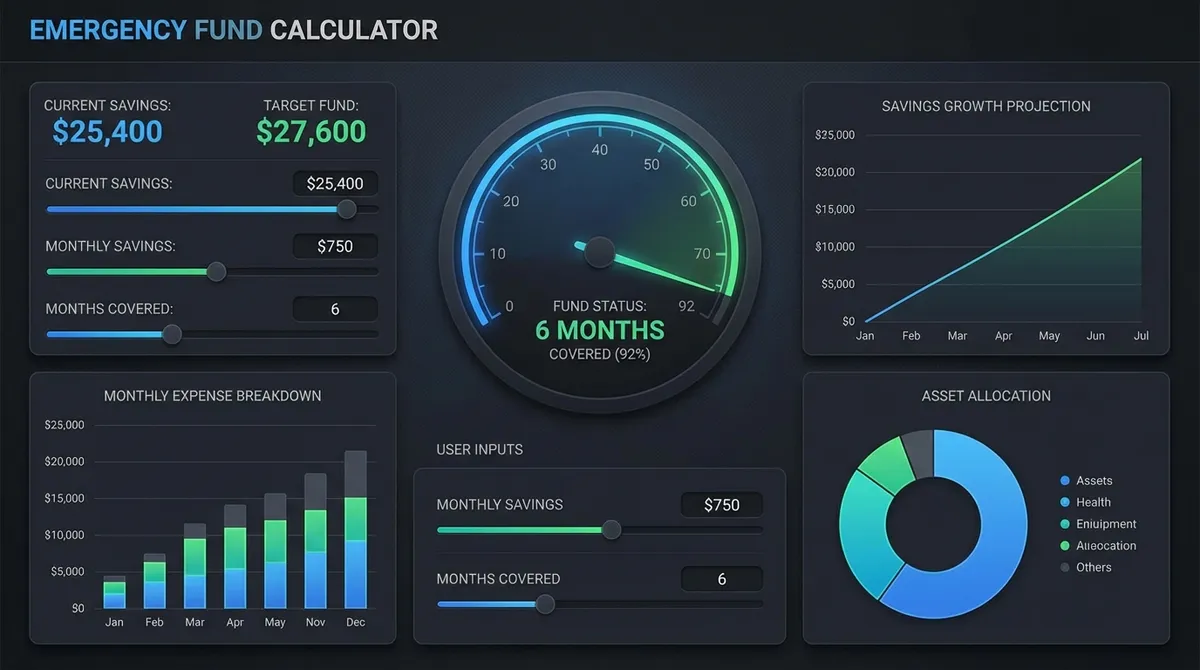
46% of Americans have enough emergency savings to cover three months of expenses—a stark reminder that financial preparedness remains a critical challenge in 2025. With rising living costs, and the average emergency expense reaching $838 for car repairs alone, building a robust emergency fund isn't just financial advice—it's psychological armor against life's inevitable curveballs.
Key Statistic: The $400 Reality Check
According to the Federal Reserve's latest Survey, 63% of adults can cover a $400 unexpected expense with cash or savings. While this represents stability for many, it means over one-third of Americans would need to borrow, sell assets, or simply couldn't pay—creating cascading financial stress that affects mental health, work performance, and relationships.
Why Emergency Funds Matter Beyond the Numbers
The psychological impact of having cash reserves extends far beyond simple arithmetic. Research from Vanguard shows that households with $2,000 or more in emergency savings report a 21% increase in financial well-being compared to those without this buffer. This isn't just about money—it's about reclaiming mental bandwidth previously consumed by financial anxiety.
Consider this: Employees with adequate emergency funds are four times less likely to be distracted at work due to financial concerns. When you're not constantly calculating how to cover a potential emergency, you can focus on career growth, relationships, and long-term planning. Quality sleep improves for 68% of people with adequate emergency funds, and relationship stress—cited by 43% of couples as their primary source of tension—decreases significantly.
The 3-6 Month Rule: Modern Interpretations for 2025
Financial advisors have long recommended saving 3-6 months of expenses, but this benchmark requires personalization based on your unique circumstances. The traditional rule emerged when job searches took 2-3 months. Today's reality often demands longer timelines, especially in specialized fields or during economic downturns.
| Your Situation | Recommended Coverage | Rationale |
|---|---|---|
| Dual-income household, stable jobs | 3-4 months | Reduced risk of complete income loss |
| Single income, dependents | 6-8 months | Higher risk; multiple people depend on one income |
| Self-employed / gig worker | 6-12 months | Income volatility and variable payment cycles |
| High-risk industry | 9-12 months | Economic sensitivity; longer job search times |
| Pre-retirees (50+) | 18-24 months | Age discrimination in hiring; limited working years to rebuild |
Essential vs. Non-Essential: The Defining Line
Calculating your emergency fund begins with honest categorization of expenses. Essential expenses maintain your basic standard of living and prevent financial catastrophe. These include:
Essential Expenses
- Housing (rent/mortgage, property taxes, HOA fees)
- Utilities (electricity, gas, water, trash)
- Groceries and basic household supplies
- Healthcare premiums and medications
- Minimum debt payments
- Transportation (car payment, gas, insurance)
- Basic communication (cell phone, internet)
- Childcare if required for work
Non-Essential (Cut During Crisis)
- Streaming subscriptions
- Dining out and entertainment
- Non-essential shopping
- Gym memberships
- Vacations and travel
- Enhanced cable packages
- Beauty services
- Hobby expenses
The High-Yield Advantage: Where to Stash Your Cash
In 2025's rate environment, keeping your emergency fund in a traditional savings account earning 0.01% APY is quietly eroding your purchasing power through inflation. Current high-yield savings accounts offer 4.00-5.00% APY—a dramatic difference that compounds significantly over time.
Compound Interest Reality Check
$4
Traditional Bank (0.04% APY)
On $10,000
$450
High-Yield (4.5% APY)
On $10,000
$446
Difference
That's a vacation
Ideal emergency fund accounts should offer: FDIC/NCUA insurance up to $250,000, no minimum balance requirements, no monthly fees, easy online transfers (1-3 day maximum), mobile check deposit, and robust fraud protection. Money market accounts can offer slightly higher rates while maintaining accessibility, but ensure check-writing capabilities are included.
The Automation Advantage: Making Saving Invisible
Behavioral economics research consistently shows that automated saving outperforms manual saving by 2.5x. When you remove the decision-making friction, saving becomes consistent rather than sporadic. The key principle: make it automatic and make it gradual.
Proven Automation Strategies:
1. Paycheck Splitting
Arrange with payroll to direct deposit 10-15% of each paycheck directly into your emergency fund account. This ensures you never "see" the money in your checking account, removing the temptation to spend it.
2. Round-Up Programs
Many banks and apps like Acorns round debit purchases to the nearest dollar, transferring the difference to savings. A $4.25 coffee becomes $5, with $0.75 automatically saved—small amounts that accumulate surprisingly quickly.
3. Windfall Strategy
Commit to allocating 50% of any "surprise" money—tax refunds, bonuses, cash gifts—to your emergency fund before you even receive it. This prevents lifestyle inflation while accelerating your savings timeline.
4. Expense Reduction Recycling
When you cancel a subscription or negotiate a lower bill, immediately set up an automatic transfer for the monthly savings amount to your emergency fund. You've proven you can live without it, so put it to work.
5. Side Hustle Maximization
If you have variable income from gig work or freelancing, commit to saving 100% of all income above your baseline monthly earnings. This averages out the peaks and valleys while building your buffer faster.
Industry-Specific Emergency Fund Strategies
Self-Employed & Gig Workers: The Volatility Buffer
Gig workers face unique challenges: income volatility, lack of employer benefits, and irregular payment cycles. The 6-12 month recommendation isn't excessive—it's necessary. Beyond the standard emergency fund, gig workers should also:
- Maintain a separate "tax fund" (25-30% of income) to avoid quarterly tax surprises
- Create a "benefits gap fund" for health insurance deductibles and uncovered expenses
- Build a "payment delay cushion" for clients who pay late (30-60 days typical)
Real example: Sarah, a freelance graphic designer, had $18,000 saved when her largest client (40% of income) went bankrupt. The fund covered six months while she rebuilt her client base without taking predatory loans.
Pre-Retirees (50+): The Age-Adjusted Strategy
For those approaching retirement, the stakes are higher and the recovery window shorter. CFP professionals now recommend 18-24 months of expenses for pre-retirees, considering:
- Age discrimination in hiring (job searches take 2-3x longer for 55+)
- Limited working years to rebuild depleted funds
- Higher healthcare costs before Medicare eligibility
- Supporting adult children or aging parents simultaneously
Strategic tip: Consider keeping 6 months in high-yield savings and the remainder in a conservative bond fund with check-writing privileges for a blend of accessibility and growth.
The Tiered Emergency Fund: A Modern Approach
Rather than keeping 6 months of expenses in a single account, sophisticated savers use a tiered approach that balances accessibility, yield, and purpose. This strategy prevents over-saving in low-yield accounts while ensuring appropriate liquidity.
Tier 1: Immediate Access ($1,000-$2,000)
Location: Checking account linked debit card
Purpose: True emergencies requiring instant access (car tow, urgent medical co-pay)
Characteristics: Ultra-liquid, minimal interest, immediate availability
Tier 2: Short-Term Buffer (1-2 months expenses)
Location: High-yield savings account
Purpose: Most emergencies (appliance replacement, moderate medical bills)
Characteristics: 1-3 day access, 4-5% APY, FDIC insured
Tier 3: Extended Coverage (3-6 months)
Location: Money market account or short-term CDs (laddered)
Purpose: Job loss, major medical events, extended emergencies
Characteristics: 3-7 day access, slightly higher yields, check-writing possible
Tier 4: Contingency Credit (Unused)
Location: Unused credit cards or HELOC
Purpose: Backup for catastrophic emergencies beyond fund capacity
Characteristics: Immediate access if needed, cost only if used, requires discipline
Common Emergency Fund Mistakes That Derail Progress
Even well-intentioned savers fall into predictable traps that undermine their emergency fund strategy. Recognizing these common errors can save years of frustration and financial vulnerability.
Critical Mistakes to Avoid:
1. The "All or Nothing" Perfectionism Trap
Waiting to save "enough" before starting means many people never begin. A $500 mini-fund is infinitely better than $0. Start with what you can, even if it's $25 per week.
2. Raiding the Fund for Non-Emergencies
Vacations, holiday shopping, and "once-in-a-lifetime" deals are not emergencies. Define what constitutes an emergency before you need to decide in the moment.
3. Keeping Funds Too Accessible
An emergency fund in your everyday checking account will disappear through gradual, justifiable small purchases. Keep it separate—out of sight, out of mind.
4. The Investment Temptation
Putting emergency money in stocks or crypto defeats the purpose. The S&P 500 dropped 38% in 2008—exactly when emergency funds are most needed. Liquidity trumps returns for this purpose.
5. Viewing Retirement Accounts as Emergency Funds
401(k) loans and IRA withdrawals come with penalties, taxes, and opportunity costs that compound over decades. This should be your absolute last resort.
Your 90-Day Emergency Fund Action Plan
Building an emergency fund can feel overwhelming, but breaking it into a structured 90-day plan transforms it from abstract goal to concrete reality. This approach creates momentum and builds habits that sustain long-term success.
WEEK 1-2: Assessment & Foundation
- Calculate your number: Use our emergency fund calculator or savings goal calculator to determine your exact target based on your expenses, job stability, and risk tolerance.
- Open a dedicated account: Research and open a high-yield savings account—aim for 4.5%+ APY with no fees.
- Set up automatic transfers: Start with $25-50 per week, scheduled for the day after your paycheck deposits.
- Track everything: Use a budgeting tool to identify where your money currently goes.
WEEK 3-4: Expense Optimization
- Cancel and negotiate: Cancel at least three subscriptions. Call to negotiate bills (internet, insurance, cell phone).
- Redirect found money: Calculate monthly savings from cuts and set up an automatic transfer for that exact amount.
- Increase automatic savings: Bump your weekly transfer by $10-25 based on what you've identified you can afford.
- Track your progress: Set up a visual tracker (spreadsheet, app, or physical chart) to monitor growth.
MONTH 2: Acceleration
- Sell unused items: List 5-10 items on Facebook Marketplace or eBay; deposit proceeds directly to emergency fund.
- Side hustle week: Dedicate one weekday evening and one weekend day to extra income (gig work, freelancing, overtime).
- Optimize grocery spending: Plan meals, use coupons, reduce dining out. Redirect 50% of savings to emergency fund.
- Review and increase: Bump automatic transfers another 10-20% as you prove you can live on reduced spending.
MONTH 3: Habit Formation
- Challenge yourself: Pick a "no-spend" challenge weekend and transfer what you would have spent.
- Automate tax refunds: If you get a refund, set up direct deposit with 50% going to emergency fund.
- Celebrate milestones: Acknowledge when you hit $500, $1,000, and $2,500 with a free activity that reinforces the habit.
- Review and adjust: Assess what's working, what's not, and optimize your approach for the next quarter.
The Bottom Line: Emergency Funds as Financial Freedom
An emergency fund isn't about hoarding money out of fear—it's about creating options. When your car breaks down, you choose the repair shop based on quality, not payment plans. When a medical bill arrives, you focus on health, not how to pay. When your job becomes toxic, you can afford to search for something better rather than feeling trapped.
The calculator above gives you the numbers, but the real value lies in the peace of mind that comes from knowing you're prepared. Start where you are, use what you have, and build as you can. The goal isn't perfection; it's progress toward a future where financial emergencies are inconveniences, not catastrophes.
Your Emergency Fund Journey Starts Now
Calculate your target, open your high-yield account, and make your first automatic transfer today.