Understanding Gross Pay: The Foundation of Your Finances
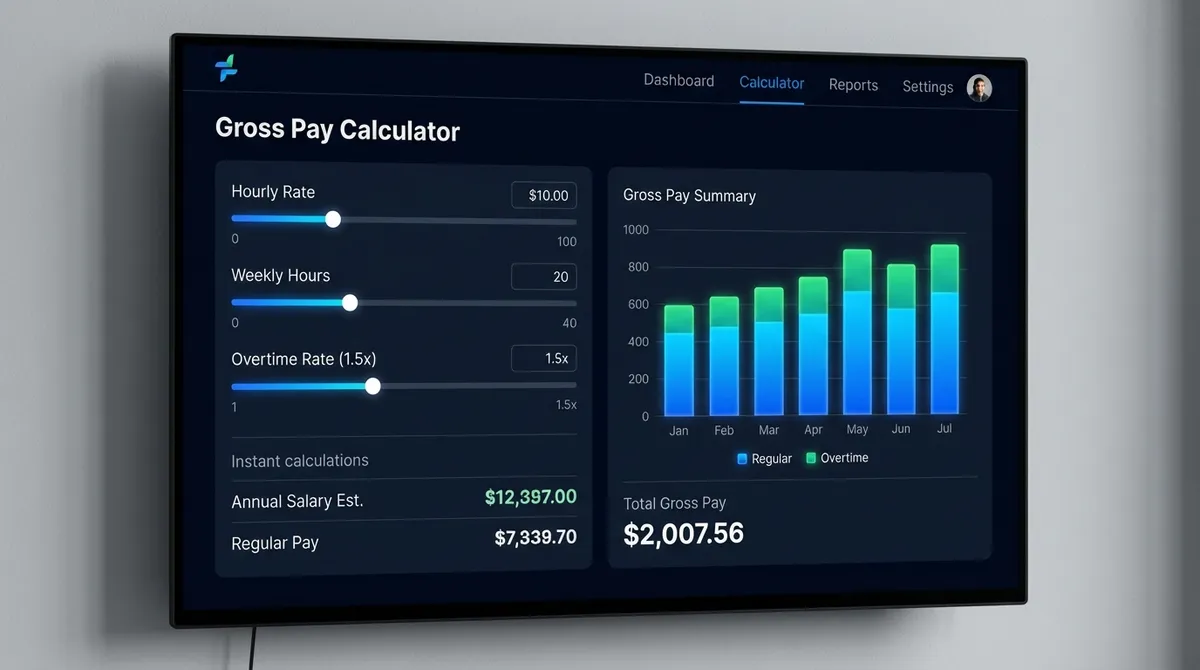
When you receive a job offer, the salary or hourly rate they quote is your gross pay. It's the big number at the top of your pay stub, before Uncle Sam and other deductions take their cut. While it might seem straightforward, understanding exactly how your gross pay is calculated—especially when overtime, bonuses, or different pay frequencies are involved—is critical for negotiating salaries, applying for loans, and planning your personal budget.
In 2025, with remote work and flexible schedules becoming the norm, pay structures have become more varied. Whether you're paid weekly, bi-weekly, or semi-monthly, knowing how to convert your earnings into an annual figure (or vice versa) gives you the power to compare jobs apples-to-apples. This guide breaks down the math, the laws, and the strategies to maximize your earnings.
Why it matters: Your gross pay determines your borrowing power. Lenders look at your gross monthly income, not your net take-home pay, when deciding if you qualify for a mortgage or car loan. A solid grasp of this number can be the difference between approval and rejection.
How Gross Pay is Calculated
The formula for gross pay depends largely on how you are compensated: strictly by the hour, or via a fixed annual salary. Our calculator handles both, but here is the manual math so you can double-check your pay stub.
Hourly Employees
For most workers, pay is based on time worked plus premiums for overtime.
(Overtime Hours × Rate × 1.5)
Regular: 40 × $20 = $800
Overtime: 5 × $30 = $150
Total Weekly Gross: $950
Salaried Employees
Salaried staff are paid a fixed amount per year, divided by pay periods.
Pay Periods: 26 per year
$60,000 ÷ 26
Gross Pay Per Check: $2,307.69
The "Overtime Multiplier"
Federal law (FLSA) requires a multiplier of 1.5x for overtime hours (commonly called "time and a half"). However, some companies or union contracts offer:
- Double Time (2.0x): Often for holidays or Sundays.
- Triple Time (3.0x): Rare, but seen in high-risk shifts or extreme holidays.
Gross vs. Net Pay: The Critical Difference
You earned $2,000... but only $1,600 hit your bank account. Where did the $400 go? That is the difference between Gross and Net pay.Gross Pay is your earnings before deductions. Net Pay is your earnings after deductions.
Standard deductions include:
- Federal Income Tax (Progressive rates)
- State Income Tax (Depends on location)
- FICA Taxes (Social Security 6.2% + Medicare 1.45%)
- Health Insurance Premiums
- Retirement Contributions (401k)
Weekly vs. Bi-Weekly vs. Monthly: Does it Matter?
While your total annual earnings might be the same, when you get paid affects your cash flow budgeting. Here is how the most common schedules break down:
| Frequency | Paychecks/Year | Best For... |
|---|---|---|
| Weekly | 52 | Hourly workers; fast cash flow access. |
| Bi-Weekly | 26 | Most common; two months/year have 3 paychecks! |
| Semi-Monthly | 24 | Salaried staff; consistent dates (e.g., 1st & 15th). |
| Monthly | 12 | Executives; requires disciplined budgeting. |
Budget Tip: If you are paid bi-weekly, budget based on 2 paychecks per month. Treat the two "extra" paychecks in the year (since 52 weeks ÷ 2 = 26 checks) as bonus savings or debt payoff money.
What IS and IS NOT in Gross Pay?
It is easy to confuse gross pay with "total compensation." Gross pay is strictly the taxable money paid to you. It typically does not include the value of benefits that the company pays directly.
Included in Gross Pay
- • Base Hourly Wages / Salary
- • Overtime Pay
- • Bonuses (Performance, Signing, Holiday)
- • Commissions
- • Tips (Reported)
- • Sick Pay / Vacation Pay
Excluded from Gross Pay
- • Employer 401(k) Match (usually)
- • Employer-paid Health Premiums
- • Uniform Allowances (non-taxable)
- • Expense Reimbursements
- • Stock Options (until exercised)
Maximizing Your Gross Pay: Negotiation Strategies
Your gross pay is the baseline for your entire financial life. Increasing it is often easier than cutting expenses.
The "Total Comp" Trap
Employers love to talk about "Total Compensation" (Salary + Bonus + Benefits). While valuable, you can't pay rent with health insurance premiums. Always focus your negotiation on the Base Gross Salary. This is the guaranteed number that determines your mortgage approval and cash flow.
Location-Based Pay Adjustments
In 2025, many companies use "geographic pay bands." A similar role might pay $120,000 gross in New York City but only $90,000 in Ohio. If you are a remote worker, arguing for a "national" pay rate rather than a local one can significantly boost your gross earnings.
Cost of Living vs. Gross Pay
A high gross pay in a high-tax state (like California) might result in lower net pay than a moderate salary in a no-tax state (like Texas or Florida). Always run the numbers through a paycheck calculator before accepting a relocation offer.
Frequently Asked Questions
Can Gross Pay ever be lower than Net Pay?
No. Gross pay is the starting amount. Net pay is the result after subtractions. The only theoretical exception would be a negative payroll error, but mathematically, you cannot take home more than you earned unless you receive a non-payroll reimbursement (like a travel stipend) that is paid separately.
Is a bonus part of Gross Pay?
Yes. Bonuses are fully taxable income. However, they are often withheld at a flat "supplemental rate" (often 22% for federal tax), which might make it seem like they are taxed "higher" than your regular check. You will likely get some of that back when you file your tax return.
Does my employer pay taxes on my Gross Pay?
Yes. Your employer pays "payroll taxes" on top of your gross pay. For every dollar you earn, they pay an additional 6.2% for Social Security, 1.45% for Medicare, plus federal and state unemployment insurance (FUTA/SUTA). Your "cost" to the company is roughly 1.1x to 1.3x your gross salary.
Why did my Gross Pay change?
If you are hourly, it varies with hours worked. If you are salaried, it should be constant unless you received a raise, a bonus, or took unpaid time off. Check your pay stub for any retro-pay adjustments or changes in pay period dates.
Payroll Glossary: Decoding Your Pay Stub
Form W-2
The year-end tax form your employer sends to you and the IRS. It sums up your total gross pay and all taxes withheld for the year.
Form W-4
The form you fill out when you start a job. It tells your employer how much federal income tax to withhold from each paycheck.
FICA
Federal Insurance Contributions Act. The combined tax for Social Security and Medicare. You pay 7.65%, and your employer matches it.
YTD (Year-to-Date)
The cumulative total of your earnings and deductions from January 1st to the current pay period.
Garnishment
A legal order requiring an employer to withhold money from your paycheck to pay a debt, such as child support or back taxes.
Imputed Income
The value of non-cash benefits (like group life insurance over $50,000) that is treated as taxable income and added to your gross pay for tax purposes.
Article verified by Jurica Šinko on December 11, 2025. This content is for educational purposes and reflects 2025 federal labor standards.
Category: Tax & Payroll • Topics: Gross Income, Payroll Math, Earnings Analysis.