The Complete Guide to Private Mortgage Insurance (PMI) in 2025
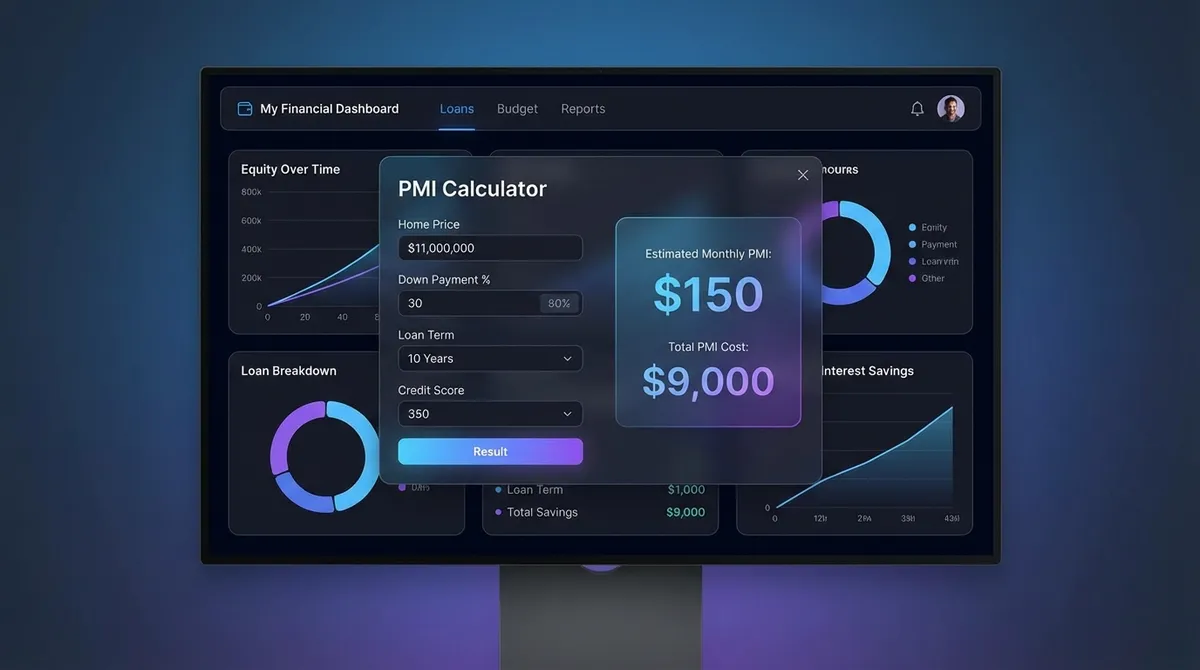
For many aspiring homeowners, the "20% down payment rule" feels like an impossible barrier. In 2025, with national median home prices hovering near historic highs, saving up $80,000 or more in cash is a daunting task. This is where Private Mortgage Insurance (PMI) bridges the gap.
PMI is a financial protection policy that secures the lender—not you—against loss if you stop making mortgage payments. By paying this insurance premium, you earn the right to buy a home with as little as 3% to 5% down. While often viewed as a "wasted cost," savvy homebuyers see PMI as a strategic tool to stop renting and start building equity years sooner than they otherwise could.
However, PMI is not permanent. Unlike property taxes or homeowners insurance, PMI can be eliminated. This guide explores exactly how PMI is calculated, how much it really costs, and the proven strategies to remove it from your mortgage payments as quickly as possible.
Key 2025 Takeaway
The average PMI premium in 2025 ranges from 0.3% to 1.5% of your loan amount annually. On a typical $400,000 mortgage, this adds $100 to $500 to your monthly payment. Your specific rate is heavily influenced by two factors: your credit score and your down payment percentage.
How Is PMI Calculated?
The formula for calculating PMI is straightforward, though the rate itself is determined by a complex risk assessment matrix used by mortgage insurers (like MGIC, Radian, or Essent).
The 3 Factors Driving Your Rate
Insurers view you as a "risk profile." To determine your annual premium percentage, they look primarily at:
1. LTV Ratio (Down Payment)
Your "Loan-to-Value" ratio. A 5% down payment means 95% LTV. Higher LTV means higher risk for the lender, resulting in a higher rate.
2. Credit Score
The single biggest swing factor. A borrower with a 760 FICO score might pay half the PMI rate of someone with a 660 score.
3. Loan Type
Conventional loans use private insurance. FHA loans use federal mortgage insurance (MIP), which has different fixed rates regardless of credit score.
| Credit Score | 15% Down (85% LTV) | 10% Down (90% LTV) | 5% Down (95% LTV) | Cost Impact (Monthly) |
|---|---|---|---|---|
| 760+ (Excellent) | 0.19% | 0.30% | 0.41% | Lowest ($63-$136/mo) |
| 720-759 (Good) | 0.30% | 0.49% | 0.73% | Standard ($100-$243/mo) |
| 660-679 (Fair) | 0.65% | 1.10% | 1.50% | High ($216-$500/mo) |
| 620-639 (Poor) | 0.99% | 1.55% | 2.15% | Highest ($330-$716/mo) |
*Estimated annual PMI rates based on $400,000 fixed-rate loan. Actual quotes will vary by provider.
Real-World Analysis: The "Wait vs. Buy" Dilemma
Consider Alex, who wants to buy a $400,000 home. He has $20,000 saved (5% down Payment). He faces a choice: buy now with PMI, or rent for 3 more years to save a full 20% ($80,000).
Option A: Buy Now (5% Down)
- Down Payment:$20,000
- Monthly PMI (Credit 740):$240
- Total PMI Cost (7 yrs):$20,160
- Home Equity (Year 3):+$64,000
*Assumes 5% annual home appreciation.
Option B: Wait 3 Years (Rent)
- Rent Paid (3 yrs):$72,000
- PMI Paid:$0
- Home Price (Year 3):$463,000
- Extra Loan Amount Needed:+$63,000
*Rent assumption: $2,000/mo.
The Verdict:
Even though Alex pays $20,000 in PMI over 7 years in Option A, he gains over $60,000 in appreciation and principal paydown. Waiting (Option B) avoids PMI but costs him $72,000 in rent and forces him to buy a more expensive home later. PMI is the "cost of speed" that allows you to lock in today's home prices.
How to Remove PMI (Stop Paying It Early)
PMI is not a life sentence. The Homeowners Protection Act (HPA) guarantees your right to remove PMI once you build enough equity. There are three main ways to reach the "finish line."
Automatic Termination (78% LTV)
Lenders must automatically cancel PMI when your scheduled mortgage balance reaches 78% of the original home value. You don't need to do anything—it simply drops off.
Borrower-Initiated Cancellation (80% LTV)
You don't have to wait for 78%. Start contacting your lender when you hit 80% equity. You must have a good payment history and no second liens (like a HELOC) on the property.
Appreciation-Based Removal
If your home value skyrockets (e.g., a hot market or renovations), your LTV drops. If you have owned the home for at least 2 years, you can order a new appraisal. If the new value puts your loan balance at 75% LTV or lower, you can request PMI removal immediately—even if you haven't paid down much principal.
Alternatives to Conventional PMI
FHA Loans (MIP)
Government-backed loans for lower credit scores.
- Easified qualification
- MIP is permanent (lifetime of loan) if down payment < 10%
VA Loans
Exclusive to Veterans and active military.
- 0% Down Payment available
- No Monthly Mortgage Insurance
- Pays a one-time "Funding Fee" instead.
Piggyback Loans (80/10/10)
Two simultaneous mortgages to cover the purchase.
- ZERO PMI payments
- The second loan has a higher interest rate
Lender-Paid PMI (LPMI)
Lender "pays" the insurance for you.
- Lower monthly payment initially
- Interest rate is permanently higher (0.25% - 0.50%)
Deep Dive: Borrower-Paid vs. Lender-Paid PMI
Most people assume PMI is a monthly bill they pay. That is Borrower-Paid PMI (BPMI). But there is another option called Lender-Paid PMI (LPMI) where the lender "pays" the insurance in exchange for giving you a higher interest rate. Which is better?
| Feature | Borrower-Paid (Standard) | Lender-Paid (LPMI) |
|---|---|---|
| Monthly Cost | Line item on bill ($100-$300) | Hidden in interest rate (+$0/mo) |
| Interest Rate | Standard market rate | Higher (typically +0.25% to 0.50%) |
| Removability | YES (at 20% equity) | NO (Permanent for loan life) |
| Best For... | Long-term homeowners | Short-term owners (5-7 years) |
The LPMI "Hack"
LPMI can be a smart move if you know you will move or refinance within 5-7 years. The monthly savings from having no PMI bill usually outweigh the higher interest cost in the short term. However, if you stay for 30 years, that higher interest rate will cost you tens of thousands of dollars more than standard PMI would have.
Is PMI Tax Deductible in 2025?
Status: Depends on Congress.
Historically, the PMI tax deduction has been an "extender" law that expires and gets renewed retroactively. For tax years 2022 and beyond, the deduction has been in flux.
Generally, when active, the deduction allows homeowners earning under $100,000 (AGI) to deduct 100% of PMI premiums. It phases out completely at $109,000. Check with a tax professional for the current status of the "Mortgage Insurance Premiums Deduction" for the 2025 tax year.
Frequently Asked Questions
Does PMI protect me if I lose my job?▼
No. This is a common misconception. PMI protects the lender. If you want protection for yourself, you need "Mortgage Payment Protection Insurance" or a disability policy.
Is PMI cheaper than FHA Mortgage Insurance (MIP)?▼
It depends on your credit score. If you have a 720+ score, private PMI is significantly cheaper (0.3% - 0.5%) than FHA MIP (0.55% + 1.75% upfront). If your score is under 640, FHA is usually the better deal.
Can I negotiate my PMI rate?▼
Directly? No. The rates are filed with state insurance regulators. However, you can "negotiate" by shopping lenders. Different lenders use different PMI partners (like Genworth, MGIC, Radian), and some may offer better rates for your specific profile.
Do I have to pay PMI on a second home or investment property?▼
Yes, if you put down less than 20%. In fact, PMI rates for investment properties are significantly higher because they are considered riskier loans.
Is PMI tax deductible in 2025?▼
The deductibility of PMI has been a "temporary" provision in the tax code that Congress must renew periodically. For tax years 2022 and beyond, the deduction status has been uncertain and subject to last-minute legislative changes. Generally, if active, it is available to homeowners with an Adjusted Gross Income (AGI) up to $100,000, phasing out completely at $109,000. Always verify with a CPA for the current tax year.
Does paying extra principal help remove PMI faster?▼
Absolutely. Every dollar of extra principal you pay increases your equity and lowers your Loan-to-Value (LTV) ratio. If you make just one extra mortgage payment per year, you could reach the 80% LTV removal threshold 3–4 years ahead of schedule, saving thousands in insurance premiums.