Complete Guide: SBA Loan Calculator
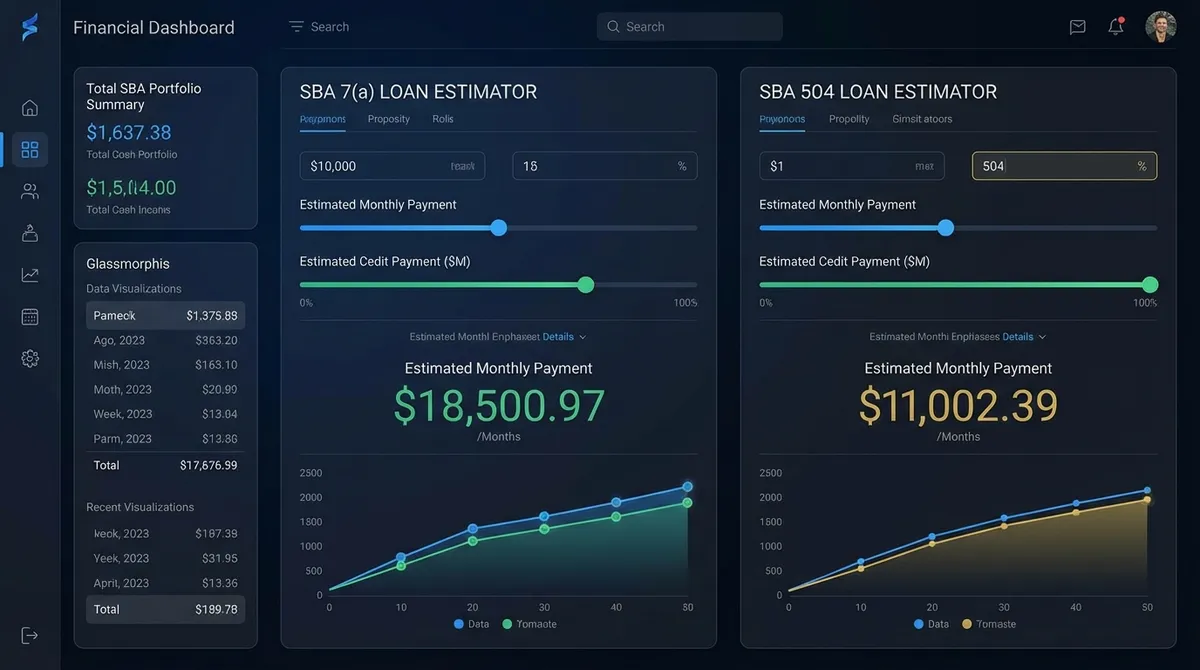
Illustration of the SBA loan calculator interface, demonstrating how to input SBA fees and loan terms to determine monthly payments and total costs accurately.
Introduction
SBA loans represent one of the most accessible and affordable financing options for small business owners in the United States. With over $25 billion in new loans approved annually across more than 50,000 businesses, these government-backed loans provide critical capital for everything from working capital and equipment purchases to real estate acquisitions and business expansions.
The two primary SBA loan programs—7(a) and 504—serve different purposes but share common features: competitive interest rates, longer repayment terms than conventional loans, and government guarantees that reduce lender risk. Understanding the true cost of an SBA loan requires more than just looking at the interest rate; guarantee fees, packaging fees, and other costs can significantly impact your total financing expense.
This comprehensive guide walks you through SBA loan calculations, fee structures, qualification requirements, and practical strategies for securing the best possible terms for your business financing needs in 2025.
What Are SBA Loans and How Do They Work?
SBA loans are partially guaranteed by the U.S. Small Business Administration, a federal agency dedicated to supporting small business growth and development. Contrary to popular belief, the SBA does not lend money directly to businesses—instead, they work with approved lenders (typically banks and credit unions) to provide loans with more favorable terms than conventional business financing.
The government guarantee—typically 75% to 85% of the loan amount—reduces the lender's risk, enabling them to offer:
- Lower interest rates: Typically 2-3 percentage points below conventional business loan rates
- Longer repayment terms: Up to 25 years for real estate, 10 years for equipment and working capital
- Lower down payments: As little as 10% for 504 loans, often 0% for 7(a) working capital loans
- Higher loan amounts: Up to $5 million for 7(a) loans, $5.5 million for 504 loans
The SBA charges guarantee fees to offset the cost of their loan programs. These fees are typically passed through to borrowers and can range from 0% for small loans under $25,000 to 3.375% for loans over $1 million. Understanding these fees is crucial for calculating the true cost of your SBA loan.
SBA 7(a) vs 504 Loans: Key Differences
While both programs support small businesses, SBA 7(a) and 504 loans serve different purposes and have distinct structures. Choosing the right program depends on your specific financing needs and business situation.
SBA 7(a) Loans: Flexible Working Capital
The 7(a) program is the SBA's most popular loan program, accounting for over 70% of all SBA lending. These loans offer maximum flexibility in use of proceeds, making them ideal for:
- Working capital and inventory purchases
- Equipment and machinery acquisitions
- Business expansions and renovations
- Debt refinancing under certain conditions
- Real estate purchases for business operations
- Changes of business ownership
SBA 504 Loans: Major Asset Financing
The 504 program is designed specifically for major fixed asset purchases that promote business growth and job creation. These loans feature a unique three-part structure:
- Bank portion (50%): Conventional loan from a bank or credit union
- CDC portion (40%): SBA-guaranteed portion from a Certified Development Company
- Borrower down payment (10%): Minimum equity contribution from the business
💡 Use Case Comparison:
- 7(a): Buy inventory, hire staff, purchase equipment, refinance debt, general working capital
- 504: Purchase commercial real estate, buy heavy machinery, major facility renovations
SBA Loan Calculation Formula and Components
SBA loan calculations involve several components beyond the basic loan amount and interest rate. Understanding each element helps you accurately assess the total cost of financing and make informed borrowing decisions.
Basic Monthly Payment Formula
Where:
M = Monthly payment
P = Principal loan amount (net of down payment and fees)
r = Monthly interest rate (annual rate ÷ 12)
n = Total number of payments (loan term in years × 12)
SBA-Specific Fee Calculations
Our calculator accounts for the most common SBA fees that impact your total financing costs:
SBA 7(a) Guarantee Fees (FY 2025)
- ≤ $25,000: 0.00%
- $25,001–$50,000: 1.00%
- $50,001–$150,000: 1.75%
- $150,001–$750,000: 2.25%
- $750,001–$1,000,000: 2.75%
- $1,000,001+: 3.375%
SBA 504 Fee Structure
- SBA Fees: 2.65% of loan amount
- Legal Fees: $2,000–$3,000
- Funding Fee: 0.25%
- Underwriting Fee: Varies by CDC
- Processing Fee: Varies by lender
The calculator also determines your effective APR by incorporating all fees into the interest rate calculation. This provides a more accurate comparison with conventional loan offers that may advertise lower rates but charge higher upfront fees. For more details on official loan programs, visit the SBA website. You can also check your working capital needs or review your startup costs. Proper planning with a business budget calculator is essential.
SBA Loan Qualification Requirements
Qualifying for an SBA loan requires meeting both SBA standards and individual lender requirements. While SBA guarantee makes these loans more accessible, approval still depends on demonstrating creditworthiness and the ability to repay.
Basic SBA Eligibility Criteria
To qualify for any SBA loan program, your business must meet these fundamental requirements:
- For-profit business: Operating legally in the United States or its territories
- Small business status: Meet SBA size standards based on industry, revenue, or employee count
- Good character: Owners must have acceptable credit and legal backgrounds
- Management expertise: Demonstrated ability to successfully operate the business
- Equity investment: Owners must have invested their own time and money into the business
- Credit elsewhere unavailable: Unable to obtain financing on reasonable terms elsewhere
- Sound business purpose: Loan proceeds must be used for an eligible business purpose
SBA 7(a) Specific Requirements
Strong Credit Profile
Minimum 680+ credit score for most lenders. Higher scores (720+) qualify for better rates.
Business Revenue
Annual revenue of $100,000+ typically required. Higher revenue improves approval odds.
Time in Business
2+ years preferred, but startups may qualify with strong business plans and industry experience.
Debt Service Coverage
Minimum 1.15x DSCR required. Calculate: Net Operating Income ÷ Annual Debt Payments.
SBA 504 Additional Requirements
504 loans have stricter requirements due to their structure and purpose:
- Job creation/retention: Must create or retain one job per $65,000 borrowed ($100,000 for manufacturers)
- Owner-occupied requirement: Must occupy at least 51% of purchased property (60% for new construction)
- Eligible use restrictions: Proceeds must be used for fixed assets only—real estate or heavy equipment
- Size limitations: Tangible net worth must be under $15 million, average net income under $5 million for 2 years
Common SBA Loan Mistakes to Avoid
Even well-qualified businesses make mistakes during the SBA loan process that can delay approval or result in unfavorable terms. Understanding these common pitfalls helps you navigate the application process more effectively.
Mistake 1: Underestimating Total Loan Costs
The Problem:
Many borrowers focus solely on the interest rate and monthly payment, overlooking significant upfront costs including SBA guarantee fees, lender packaging fees, closing costs, and legal fees. Our calculator shows a $500,000 7(a) loan at 9.5% interest over 25 years can result in total payments of more than $1.3 million when you include approximately $11,250 in guarantee fees and hundreds of thousands of dollars in interest.
The Solution:
Use our SBA loan calculator to determine the effective APR and total cost of borrowing before applying. Factor in all fees when evaluating loan affordability and comparing offers from different lenders.
Mistake 2: Applying for the Wrong Loan Program
The Problem:
Choosing between 7(a) and 504 programs without understanding their specific requirements can waste months of time and result in denial. 504 loans require job creation, cannot be used for working capital, and demand substantial equity injection—criteria that disqualify many borrowers.
The Solution:
Evaluate your financing needs against program requirements before applying. Use 7(a) for working capital, equipment, debt refinancing, and mixed-use projects. Reserve 504 loans specifically for major real estate or heavy equipment purchases where you can meet job creation requirements and provide 10% equity.
Mistake 3: Insufficient Down Payment or Equity
The Problem:
While SBA loans require less equity than conventional financing, underestimating the down payment requirement can derail your application. 504 loans mandate minimum 10% equity injection, but lenders often require 15-20% for riskier projects or borrowers with weaker credit.
The Solution:
Calculate your required down payment using our calculator and verify you have liquid assets available. For 504 loans, plan for 10-20% down payment depending on business stability and project risk profile.
Mistake 4: Poor Financial Documentation
The Problem:
Incomplete or disorganized financial documentation is the leading cause of SBA loan delays and denials. Lenders require 2-3 years of business tax returns, interim financial statements, accounts receivable aging, business debt schedules, and detailed business plans for startups.
The Solution:
Prepare comprehensive financial packages before applying. Work with a CPA to ensure financial statements are audit-ready. Create detailed business plans with market analysis, financial projections, and clear use-of-funds explanations for startup applications.
How to Get the Best SBA Loan Rates and Terms
Securing favorable SBA loan terms requires strategic preparation and understanding what lenders evaluate during the approval process. Follow these proven strategies to improve your chances of approval and obtain more competitive rates.
Improve Your Credit Profile
Your personal and business credit scores significantly impact loan approval and interest rates:
- Personal credit: Aim for 720+ FICO score. Pay down credit card balances below 30% utilization
- Business credit: Establish business credit with DUNS number and trade lines with suppliers
- Credit cleanup: Resolve any collections, judgments, or liens before applying
- Credit monitoring: Check reports 6 months before applying to identify and correct errors
Strengthen Your Financial Position
Lenders evaluate multiple financial metrics beyond credit scores:
Optimize Debt Service Coverage Ratio
Calculate your current DSCR: Net Operating Income ÷ Current Annual Debt Payments
Improve DSCR by increasing revenue, reducing expenses, or paying down existing debt. Target 1.25x minimum.
Build Cash Reserves
Maintain 3-6 months of operating expenses in business accounts. This demonstrates financial stability.
Avoid large, unexplained deposits or withdrawals in the 6 months preceding your application.
Choose the Right Lender
Not all SBA lenders are created equal. Traditional banks, credit unions, and specialized SBA lenders have different approval criteria, processing times, and interest rate structures. Research lenders who specialize in your industry or loan type for better results.
🎯 Rate Shopping Strategy
Submit applications to 3-4 lenders within a 14-day window. Credit bureaus treat multiple business loan inquiries as a single inquiry when clustered, minimizing credit score impact.
Compare offers based on effective APR, not just stated interest rate. Include all fees in your comparison using our calculator to ensure accurate evaluation.
When to Use SBA Loans vs. Alternative Financing
While SBA loans offer excellent terms, they're not always the best financing solution. Understanding when to pursue SBA financing versus alternative options can save time and money while ensuring you get the right capital for your specific needs.
Best Use Cases for SBA Loans
✅ Ideal SBA Loan Scenarios
- Long-term investments: Real estate purchases, major equipment acquisitions, business acquisitions
- Growth capital: Expanding operations, opening new locations, funding substantial inventory purchases
- Debt refinancing: Consolidating high-interest business debt (requires 10% payment reduction)
- Established businesses: 2+ years operational history with stable cash flow
- Amounts $150K–$5M: Sweet spot where SBA programs are most competitive
When to Consider Alternatives
🔄 Alternative Financing May Be Better
- Urgent needs: SBA loans take 30-90 days; consider business lines of credit for immediate capital
- Poor credit: Credit scores below 650 may require alternative lenders or credit repair first
- Small amounts: Loans under $50,000 often have simpler options with fewer fees
- Startup businesses: Most SBA lenders require 2+ years in business; seek microloans or investors
- Seasonal cash flow: Business lines of credit offer more flexibility than term loans
Alternative Financing Options
For Quick Capital:
- Business lines of credit (approval in days)
- Merchant cash advances (same-day funding)
- Online term loans (1-2 weeks approval)
- Invoice factoring (fast, based on receivables)
For Startups:
- SBA microloans (up to $50,000, less stringent)
- Community development loans
- Angel investors or venture capital
- Crowdfunding platforms
Key Takeaways and Next Steps
SBA loans provide exceptional financing opportunities for small businesses when used appropriately. With government guarantees enabling lower rates, longer terms, and reduced equity requirements compared to conventional financing, these programs can fuel significant business growth and expansion.
🎯 Quick Action Checklist
Before Applying:
- Check personal and business credit scores
- Calculate DSCR and cash reserves
- Determine loan amount and specific use
- Research and select preferred lenders
During Application:
- Gather 2-3 years financial statements
- Prepare detailed business plan
- Document collateral and equity injection
- Respond promptly to lender requests
The SBA loan calculator above provides accurate monthly payment estimates and total cost analysis for both 7(a) and 504 loans. Use it to evaluate different scenarios, compare loan offers, and determine the most affordable financing structure for your business needs.
Ready to pursue SBA financing? Start by using our calculator to determine affordable loan amounts, then connect with SBA-approved lenders through the SBA Lender Match tool or your local Small Business Development Center for personalized guidance through the application process.
About the Author
Jurica Šinko, Finance Expert and CPA
Jurica Šinko is a certified public accountant and finance expert with over 15 years of experience in corporate finance, small business lending, and SBA loan programs. He has helped thousands of small business owners secure financing and has written extensively on small business funding strategies, loan optimization, and financial planning. His expertise in SBA lending and commitment to making financial tools accessible has made him a trusted resource for entrepreneurs nationwide.