How to Estimate Startup Costs in 2025: The Complete Guide
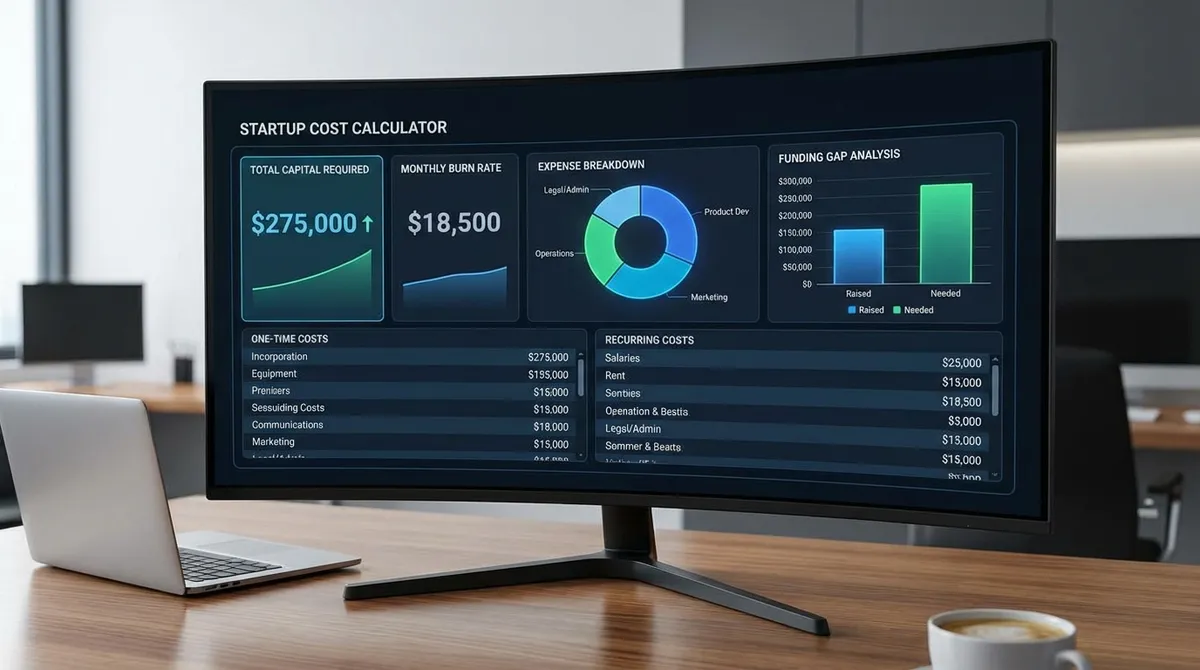
Cash flow kills more businesses than bad ideas. In 2025, the startup landscape is defined by higher interest rates but lower barriers to entry for digital tools. The difference between a successful launch and a "failure to launch" often comes down to one spreadsheet: your startup cost projection (which should account for factors like inflation).
Whether you are bootstrapping a SaaS product, opening a physical retail location, or launching a consulting practice, your financial runway is your lifeline. This guide moves beyond generic advice to give you a concrete framework for estimating, categorizing, and validating your startup costs before you spend a single dollar. We'll explore Capital Expenditures (CAPEX), Operating Expenses (OPEX), and the subtle "hidden costs" that often catch founders by surprise.
By the end of this guide, you will understand exactly how to use the SBA-recommended framework to build a defensible budget that you can take to investors, lenders, or your own bank account with confidence.
CAPEX (One-Time Costs)
Capital Expenditures are the "ticket to entry." These are large, upfront purchases that depreciate over time. In 2025, this often includes hardware, initial inventory, and intellectual property protection.
- ✓ Equipment & Technology (Servers, Laptops)
- ✓ Legal Formation (LLC/Corp Filings)
- ✓ Branding & Web Development Assets
- ✓ Lease Deposits & Physical Build-outs
OPEX (Recurring Costs)
Operating Expenses are your monthly "burn rate." This is the cash you consume just to keep the lights on. Investors look closely at this to determine how long your funding will last (runway).
- ✓ Rent, Utilities, and Internet
- ✓ Payroll, Benefits, & Contractor Fees
- ✓ Software Subscriptions (SaaS Stack)
- ✓ Marketing, Ad Spend, & SEO Tools
Breaking Down the Expenses: A Closer Look
1. Legal and Administrative Fees
Before you sell your first product, you must exist legally. This is often cheaper than expected but cannot be skipped. Costs include registering your business name, filing Articles of Organization (for LLCs) or Incorporation (for C-Corps), and obtaining local permits. In 2025, online legal services have streamlined this, but specialized industries (fintech, health, food) still require expensive compliance consults.
2. Technology Stack & Infrastructure
For digital startups, this is your "factory." It includes domain hosting, Google Workspace or Microsoft 365, project management tools (Notion, Jira), and communication hubs (Slack, Teams).Pro Tip: Many SaaS providers offer "Startup Credits" (AWS Activate, Microsoft for Startups) that can save you thousands in the first year. Don't pay full price until you have to.
3. Inventory and Supply Chain
If you sell physical goods, inventory is a cash trap. You need enough stock to fulfill orders immediately, but too much ties up capital that could be used for marketing. The calculation should include the cost of the goods themselves, plus shipping freight, customs duties, and warehousing (3PL) fees.
4. Marketing and Launch Promotion
"Build it and they will come" is a myth. You need a budget for improved visibility. This includes paid ads (Meta, Google, LinkedIn), PR releases, influencer partnerships, and content creation. A good rule of thumb for early-stage B2C startups is to budget 20-30% of your total initial capital specifically for customer acquisition experiments.
The "Rule of 6" for Funding Runway
How much money do you really need? A common mistake is budgeting only for the launch day. Realistically, most businesses take 6 to 18 months to become cash-flow positive. The "Rule of 6" suggests that whatever your monthly burn rate is, you should have at least 6 months of it in the bank before considering yourself "stable."
Minimum viable runway. Only for validated ideas with immediate revenue streams (e.g., waiting lists).
The standard recommendation. Allows for one major pivot or market delay without insolvency.
Conservative approach. Essential for hardware, R&D heavy, or seasonal businesses involving long sales cycles.
2025 Industry Startup Cost Benchmarks
Key Cost Drivers: Development labor is the biggest cost. Cloud infrastructure (AWS/GCP) starts cheap but scales fast. Customer Acquisition Cost (CAC) has risen significantly due to ad saturation.
Key Cost Drivers: Inventory and leasehold improvements dominate. POS systems have become cheaper, but labor costs for staffing have increased. Location deposits (First + Last + Security) are heavy upfront hits.
Key Cost Drivers: Lowest barrier to entry. Primary costs are personal branding (website), specialized software licenses, and professional liability insurance. This is the "leanest" startup model.
How to Interpret the Calculator Results
When you run the numbers above, you might see a "Total First Year Capital" figure that shocks you. Don't panic. This number is your fundraising goal, not necessarily what you need in your checking account today. Compare this to your projected ROI metrics (if investing in property) to ensure viability.
- •Differentiate "Must-Haves" vs. "Nice-to-Haves":Go back through your customized list. Do you need the $2,000 espresso machine for the office, or is that a "Nice-to-Have"? Strip your budget down to the bare essentials (MVP) first.
- •Cash vs. Accrual:The calculator shows costs as they occur. However, many vendors offer Net-30 or Net-60 terms. This helps cash flow. Negotiate payment terms early to keep more cash on hand.
- •Update Quarterly:A budget is a living document. As you get real quotes (e.g., your actual insurance premium vs. the estimate), come back and update the calculator. Precision improves over time.
Funding Your Startup in 2025: Options & Realities
Once you have your number from the calculator above, the next question is: Where does the money come from? In 2025, the "easy money" era of venture capital is over, but diverse funding options have matured.
1. Bootstrapping (Self-Funding)
Pros: 100% equity retention, total control, forces discipline.
Cons: High personal risk, slower growth.
Verdict: The best option for calculating your MVP costs. If you can launch for under $10,000 (as per the Service/Freelance benchmark), fund it yourself to prove traction before seeking outside capital.
2. SBA Loans (7(a) and Microloans)
The U.S. Small Business Administration remains a powerhouse for main street businesses. In 2025, SBA 7(a) loans perform well for retail and franchises with physical collateral.
Typical Rates: Prime + 2.25% to 4.75% (Check our APR calculator for true costs).
Requirement: You typically need a credit score of 690+ and must inject 10-20% of your own equity.
3. Angel Investors & Crowdfunding
For high-growth tech startups, AngelList and platforms like Republic or Wefunder allow you to raise smaller amounts from many investors.
Key Trend: "Community Rounds" are popular in 2025, allowing early customers to become small investors, turning your user base into brand advocates.
4. Revenue-Based Financing (RBF)
If you have recurring revenue (SaaS, subscription boxes), firms like Pipe or Capchase allow you to trade future revenue for upfront cash. This is non-dilutive (you don't sell stock) but expensive in terms of cash flow.
The "Fractional" C-Suite Trend
One way to lower your startup costs in 2025 is to avoid hiring full-time executives. Instead of a $180k/year CMO, hire a "Fractional CMO" for $4k/month to set strategy. The calculator's "Payroll" section allows you to model this by choosing "Contractor" instead of "Full-Time Employee" for key roles.
5 Common Startup Budgeting Mistakes to Avoid
Even with the best planning, new entrepreneurs often stumble into financial pitfalls that can derail their growth. Avoid these common errors when using the startup cost calculator:
- Underestimating the "Ramp-Up" Period: Most businesses do not reach profitability in month one. Ensure you have enough operating capital to cover 6-12 months of expenses without relying on immediate revenue.
- Ignoring Marketing Costs: A great product does not sell itself. Many founders budget heavily for product development but leave scraps for marketing. Allocate at least 20% of your initial budget to customer acquisition.
- Forgetting About Taxes: Self-employment taxes and payroll taxes can add 15-20% to your labor costs. Always factor these into your salary projections.
- Buying New Instead of Used: For equipment and furniture, buying gently used items can save you 50-70%. Save your cash for things that directly impact the customer experience.
- Not Negotiating with Vendors: Everything is negotiable, especially software subscriptions and bulk inventory orders. Don't be afraid to ask for a startup discount or extended payment terms.
The "Silent Killers" of Startup Budgets
Even experienced founders miss these. When using the calculator above, consider adding a "Contingency" line item of 10-15% for: